
Why Collagen Production Declines With Age — And Where Type 3 Fits In
Sep
Why Collagen Production Declines With Age — And Where Type 3 Fits In
Almost every skincare product claims to address “declining collagen,” but few explain the actual biology behind it. Here’s what’s happening beneath the surface.
The Fibroblast Slowdown
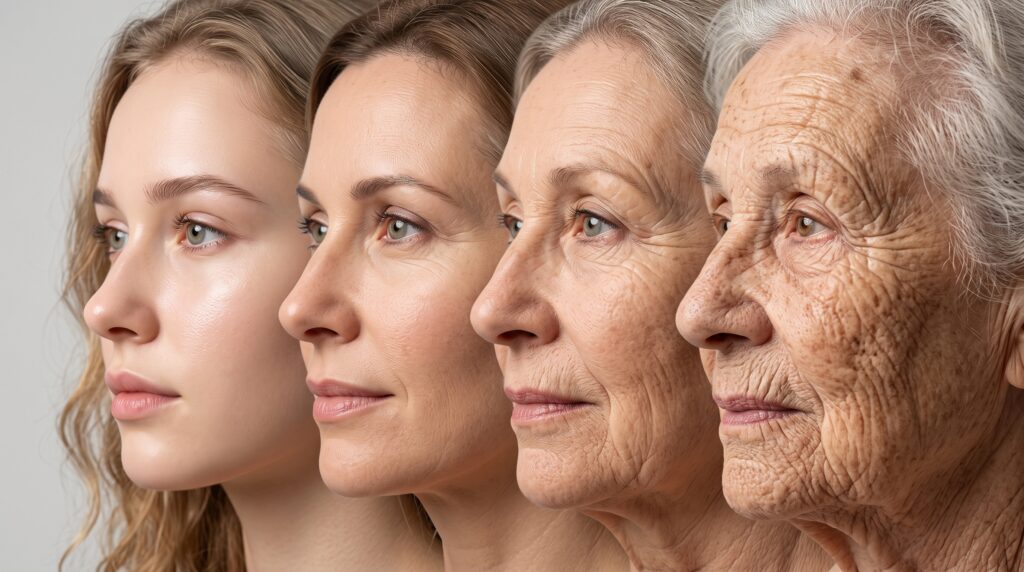
Collagen is produced by cells called fibroblasts, living in the dermis. As we age, fibroblasts gradually become less active and less numerous. This isn’t a sudden switch — it’s a slow decline that begins as early as the mid-20s and accelerates over subsequent decades.
Why the Decline Isn’t Uniform Across Collagen Types
Research comparing collagen types across age groups has found that the ratio of Type 3 to Type 1 collagen shifts as skin ages, with Type 3 declining more sharply relative to Type 1. This means aging skin doesn’t just have “less collagen overall” — it has a changing collagen composition, which is part of why skin texture changes in specific, recognizable ways (loss of elasticity before loss of firmness, for example).
Contributing Factors Beyond Chronological Age Several factors accelerate collagen decline beyond the natural aging clock:
- UV exposure — cumulative sun damage is considered the single largest external driver of collagen breakdown, a process called photoaging
- Oxidative stress — free radicals from pollution, smoking, and other sources damage existing collagen fibers
- Hormonal changes — particularly the drop in estrogen during menopause, which is linked to a notably accelerated rate of collagen loss in women
- Glycation — a process where excess sugar molecules bind to collagen fibers, making them stiffer and more brittle over time
Can Collagen Decline Be Slowed?
While the aging process itself can’t be stopped, several evidence-supported strategies can slow the rate of collagen decline:
- Consistent daily sun protection (widely considered the single most impactful preventive measure)
- Antioxidant support (vitamin C, in particular, is a required cofactor for collagen synthesis)
- Oral collagen peptide supplementation, shown in multiple studies to support fibroblast activity
- Avoiding smoking, which significantly accelerates collagen breakdown
Why This Makes Type 3 Collagen Support Relevant Earlier Than Expected
Because Type 3 collagen decline begins earlier and progresses faster than the decline in total collagen, addressing it isn’t just an “anti-aging” concern for older consumers — it’s relevant to skin resilience from the late 20s onward.
FAQ
- At what age should I start worrying about collagen decline?
Since natural decline begins in the mid-20s, many dermatologists suggest starting preventive habits (sun protection, antioxidants) in your mid-to-late 20s rather than waiting for visible changes. - Does diet affect collagen production?
Yes — adequate protein intake and micronutrients like vitamin C, zinc, and copper are all required for the body’s natural collagen synthesis process. - Is collagen decline reversible?
It can be slowed and partially supported through skincare, supplementation, and lifestyle factors, but the natural aging-related decline in fibroblast activity can’t be fully reversed.