
How UV Rays Damage Collagen (UVA vs UVB)
Sep
How UV Rays Damage Collagen (UVA vs UVB)
Ultraviolet (UV) radiation is one of the primary drivers of collagen degradation from sun exposure and premature skin aging, a process known as photoaging. UV light is divided into three types based on wavelength: UVA (315–400nm), UVB (280–315nm), and UVC (100–280nm). UVC is almost entirely absorbed by the ozone layer and does not reach the skin under normal conditions, making UVA and UVB the two wavelengths that matter for everyday skin health.
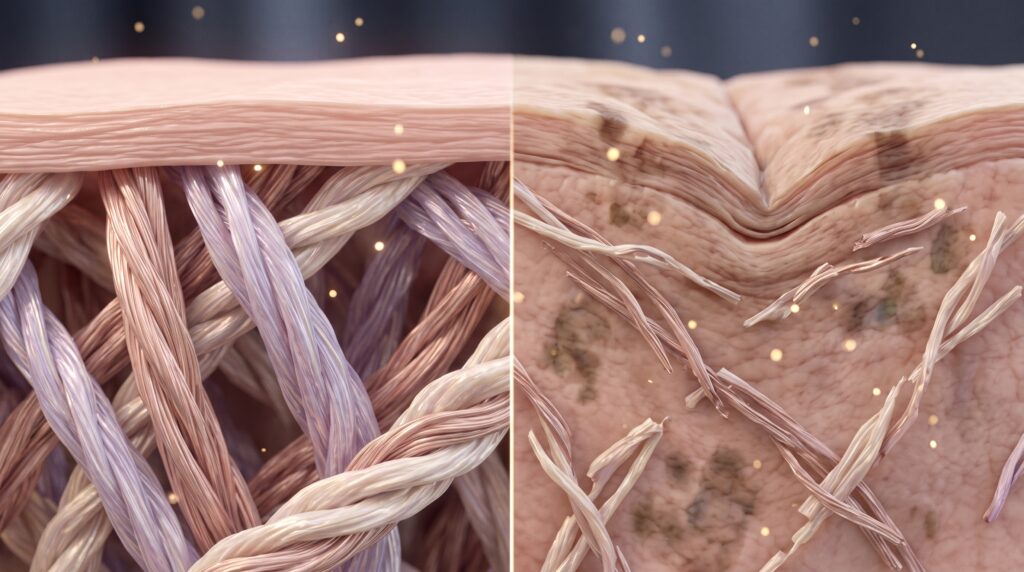
UVA rays and collagen loss: UVA penetrates deep into the dermis — the layer where collagen, including both Type I and Type 3, is produced and maintained. UVA exposure triggers the production of reactive oxygen species (ROS), which in turn activate enzymes called matrix metalloproteinases (MMPs). These enzymes break down existing collagen fibers faster than the body can replace them. Because UVA maintains consistent intensity throughout the day and year, and penetrates glass, it is responsible for the majority of long term photoaging: wrinkles, sagging, and loss of elasticity.
UVB rays and sunburn: UVB rays are more intense but penetrate only the outer epidermis. They are the primary cause of sunburn and direct DNA damage to skin cells. While UVB doesn’t reach collagen-producing cells as directly as UVA, the inflammation it triggers accelerates collagen breakdown indirectly, by increasing oxidative stress and MMP activity throughout the skin.
Both wavelengths suppress new collagen synthesis while accelerating its breakdown — which is why consistent UV exposure, not just visible sunburn, is the leading external cause of sun-induced collagen loss over time.